Project Management Life Cycle Phases with Real-World Examples: Good project management is essential for the successful execution of business initiatives. Whether the project is a new software product, a marketing initiative, or building a piece of infrastructure, project management is how businesses consider all the time, scope, and budget considerations into consideration. All project practitioners need to have a solid understanding of Project Management Life Cycle (PMLC). In this blog, we will walk through the phases of Project Management Life Cycle, provide real examples, and outline the tools and methods we use in every phase. When this blog is complete, you will have a solid understanding of how to lead a project from initiation to completion in a structured and orderly manner, using tools and methods we describe.
What is Project Management Life Cycle?
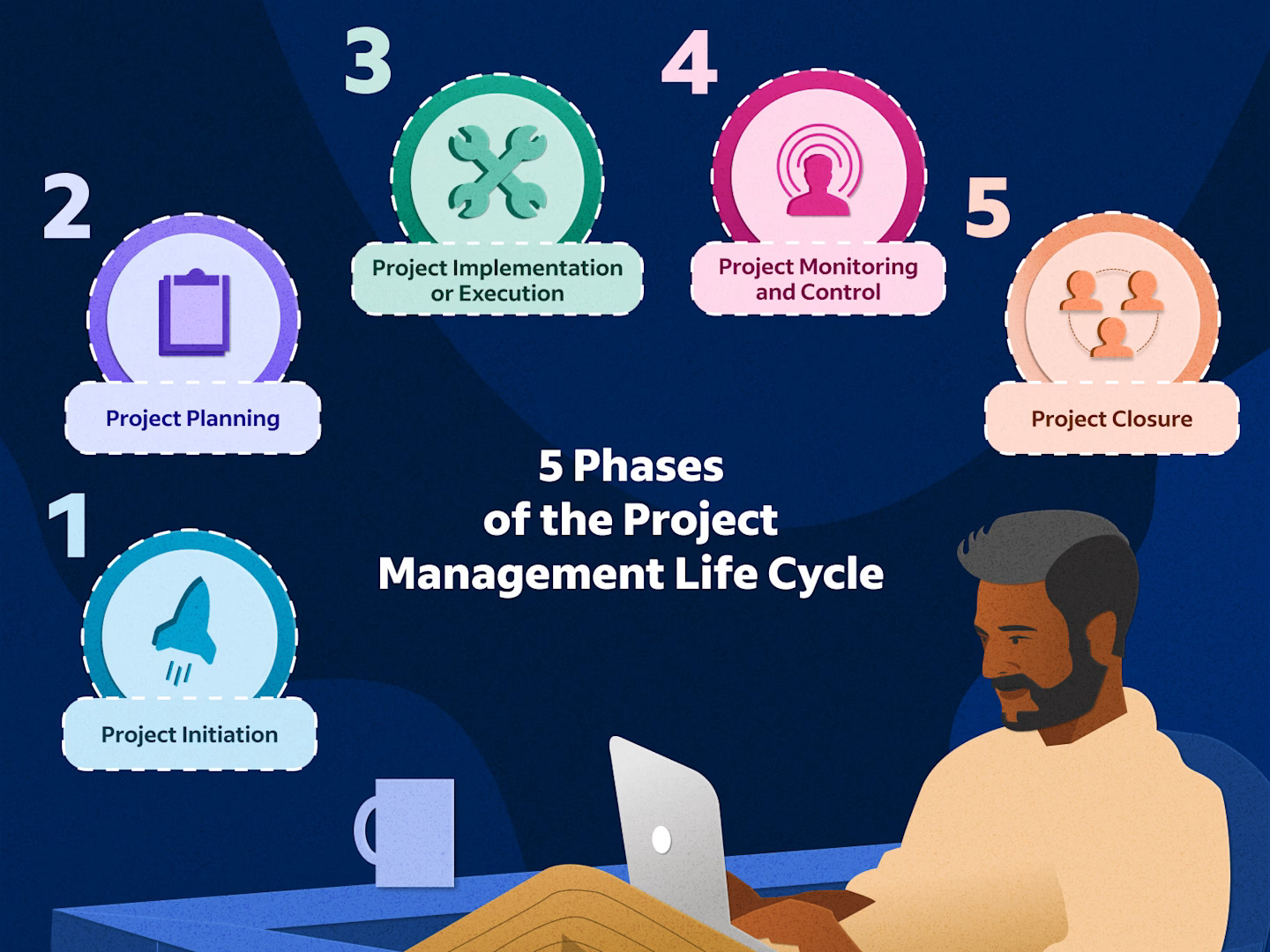
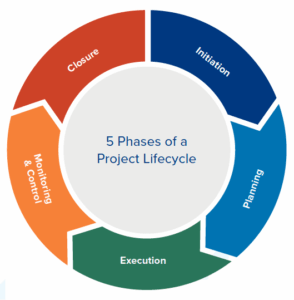
The Project Management Life Cycle (PMLC) refers to the order of the stages that define the processes involved in a project from start to finish. The PMLC ensures that the project meets its objectives and milestones and is completed on schedule as best as possible. Each stage is important to the function of the project and has distinct characteristics, needs, and utilization of tools in efforts to meet objectives.
Typically, the PMLC consists of the following phases:
- Initiation
- Planning
- Execution
- Monitoring and Controlling
- Closing
Let’s take an in-depth look at each phase with practical examples, tools, and methodologies.
1. Initiation Phase
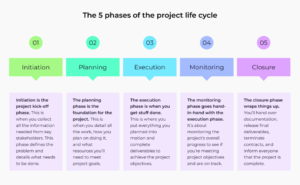
The Initiation phase establishes the foundation of the effort. This is when the project goals are set, and the project’s feasibility is evaluated. You will create the Project Charter and identify key stakeholders. Think of the initiation phase of a project as the “Go/No-Go” point of decision-making.
Real-World Example:
Imagine a software company that is considering developing a new mobile app. The initiation phase would include collecting the business requirements, defining the scope, and getting an understanding of the budget. If the feasibility study indicates it is a worthwhile Project, you can move to the next phase.
Tools Used:
- Jira (to create project backlogs and epics)
- Trello (to organize your tasks and plan milestones)
- Asana (to develop a project timeline)
Methodologies:
Agile: The Agile methodology is commonly utilized in the initiation phase, particularly in software development. Agile values flexibility and working with clients to deliver the best value and collaboration.
Waterfall: If your project has a more traditional approach, such as construction, we may consider Waterfall from the onset.
2. Planning Phase
In the Planning phase, you are going to develop the project plans that are working on an extensive project plan. This plan involves everything from a project scope, schedule, resources, project organization methodology, vision board, and anything pertaining to this project.
Real-World Example:
In the process of developing that mobile application, the planning process includes timelines for milestones (wireframes, prototype, beta release), role assignments, and considerations of possible risks (tech stack failure or user feedback delays).
Tools Used:
- MS Project (Gantt charts, resource allocations)
- Monday.com (for team collaboration and tracking progress)
- Smartsheet (for project schedule details and risk management)
Methodologies:
Scrum: Usually associated with tech-based projects, Scrum is based on delivering work through short, iterative cycles termed sprints.
PRINCE2: A highly structured project methodology focused on delivering projects within controlled phases. A manner often employed in larger, complex projects.
3. Execution Phase:
The execution phase is where the work of the project is performed. The project team takes the steps to implement the project plan, perform the work, and produce deliverables. Communication between stakeholders is important and constant management of resources, tracking progress, and management of emerging issues, is required.
Real-World Example:
For the mobile app project, the execution phase would represent the time the developers are writing code, designers are generating UI and UX elements, and testers are testing the initial workings of the app. The project managers ensure the team is persistent in proceeding through the task and all due dates are met.
Tools Used:
- Asana (for task assignments and deadline tracking)
- Trello (for managing task lists and daily workflows)
- Jira (for tracking software development progress in an Agile environment)
Methodologies:
Agile: In an Agile environment, daily stand-up meetings and sprint reviews are common practices during the execution phase.
Scrum: If the project follows Scrum, you’ll be working within fixed 2-week sprint cycles to achieve specific goals.
4. Monitoring and Controlling Phase
The monitoring and controlling phase is the process that takes place throughout the project. It involves regularly measuring the performance of the project relative to the project plan, determining where there is site on performance, and taking corrective action if performance is diminishing. The project manager will usually create KPIs (Key Performance Indicators) to determine the degree of success.
Real World Example:
In the case of the mobile application project this means ensuring that developers are consistently measuring against the coding standards and that the beta version of the application is functioning as intended. You will make adjustments to the project timelines if you are receiving a ton of broken codes when beta testing, or if the key users suggestions regarding the application’s functionality are coming back with significant negative feedback.
Tools Used:
- MS Project (for tracking project progress and resource allocation)
- Smartsheet (for monitoring timelines and resources)
- Asana (for tracking individual progress on tasks)
Methodologies:
PRINCE2: This methodology emphasizes controlling each phase of the project and requires regular reviews to ensure the project stays aligned with the plan.
5. Closing Phase
In the Closing Phase the project is considered done and the deliverable is given to the client or stakeholders, or in a personal project you may need to clear your records and document what you accomplished, this is also the time to assess if the project was successful in achieving its goals, to document lessons learned, and to conclude contractors and any associated financial transactions.
Real World Example:
The mobile app has launched, the project manager organizes a review after the launch. This will include getting feedback from the users, if it met the defined goals, and if any outstanding issues remain or if the issues were fully resolved.
Tools Used:
- Trello (for checklist items and final tasks)
- Jira (for marking off any outstanding issues)
- Asana (for project closure tasks like final reports)
Methodologies:
- Agile: Agile focuses on delivering working software, so post-launch support is crucial.
- PRINCE2: In PRINCE2, project closure is highly formalized and includes lessons learned, ensuring that future projects can benefit from prior experiences.
Tools and Methodologies in Project Management
The success of the project management life cycle is entirely dependent on the tools and methodologies that you choose to use. Below are some of the most used tools and methodologies within Project Management.
Popular Project Management Tools:
- Jira: Great for software development teams following Agile methodology.
- Trello: Ideal for visualizing tasks and tracking progress.
- MS Project: Excellent for detailed planning and scheduling.
- Asana: Simple and effective for team collaboration.
- Monday.com: Useful for managing workflows across multiple teams.
- Smartsheet: Best for managing large, complex projects with detailed scheduling.
Project Management Methodologies:
- Agile: Focuses on iterative progress through short cycles.
- Scrum: A subset of Agile, Scrum uses sprints to achieve project goals.
- Waterfall: A linear approach, ideal for projects where requirements are well-defined.
- PRINCE2: A structured methodology focused on continuous control and clear roles.
Embark on the path to your ideal career with ViewSoft Academy’s Excellent Guidance
ViewSoft Academy has a significant impact on the development of aspiring and professional project managers by providing a full range of training programs that are industry recognized. Focused on practical, hands-on learning, ViewSoft Academy teaches the core project management methodologies of Agile, Scrum, Waterfall, and PRINCE2, allowing students to gain both theoretical knowledge as well as practical experience. Expert instructors with professional certifications in project management guide learners in using numerous project management and collaboration tools such as Jira, Trello, and MS Project. With flexible learning options and career development, ViewSoft Academy empowers those who are looking to advance their career with confidence and competence.
Conclusion
The Project Management Life Cycle is an important concept to understand in every project to guide it to success. Following each structured phase: Initiation, Planning, Execution, Monitoring & Controlling, and Closing, you can ensure a project stays on track and the project objectives are met. By using the appropriate tools, including Jira, Trello, or MS Project, you can provide structured support for project success. Applying appropriate methodologies, including Agile and PRINCE2, will also support your project management methodology approach professionally.
Trained by trained, and certified project managers to give your career a boost!
Frequently Asked Questions:
Question 1: What is the average income of a project manager in the USA?
Answer. The average income of a project manager in the USA depends on the job, industry and location, but it is mostly between $70K – $120K a year.
Question 2. Should you have experience learning Project Management?
Answer. There is no experience required to start learning Project Management, but having an understanding of business or leadership concepts can be beneficial.
Question 3. What are the top project management methodologies?
Answer. The leading methodologies include Agile, Scrum, Waterfall, and PRINCE2. Each method has a
different approach that is determined by the type of project and industry needs.
Question 4. What is the best project management tool for small teams?
Answer. Software like Trello and Asana work well for small teams because they are easy to use and straightforward for task and project management.
Question 5. What is the difference between Agile and Scrum?
Answer. Agile is a methodology for project management, whereas Scrum is a specific framework within Agile that is focused on delivery in defined iterations or cycles known as sprints.
Question 6. Can project managers work remotely?
Answer. Yes, project managers can definitely work remotely as well as using software such as Trello, Jira, and Asana that support collaboration remotely and project tracking.
Question 7. How do I choose the right project management tool for my team?
Answer. You should consider factors like the complexity of the project, team size, features needed, and budget, for example, you would use Smartsheet for more complex projects whereas Trello would be simple task management.
Question 8. Do you consider that Agile improves project management? If so, how?
Answer. Agile improves project management by emphasizing flexibility, short iterations, and working together with stakeholders, which allows project managers to pivot more quickly and closer align with the client’s needs during the project.